Shopify for coffee and food
Shopify for Australian coffee roasters and food brands
Coffee and specialty food brands live on repeat orders. We build Shopify stores with subscriptions, grind and size options, wholesale accounts for cafes, and shipping set up around your roasting schedule.
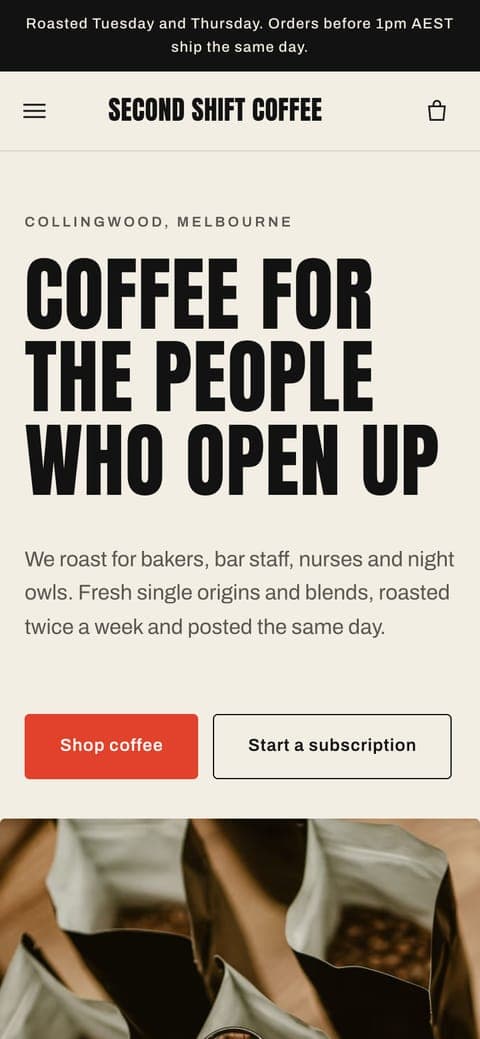
Example store
Second Shift Coffee
A loud, readable roaster store built around the subscription.
What makes coffee and food hard to sell online
Subscriptions that do not churn
Most roasters make their margin on repeat customers. A subscription that is hard to change gets cancelled. One that is easy to skip, swap and pause gets kept.
Grind and bag size options
Grind, size and origin multiply into many variants. A clean product page and the right inventory setup stops you overselling a single origin.
Wholesale and retail together
Cafes want trade pricing, invoices and reorders. Retail customers want a simple shop. Running both from one store needs planning.
Freshness and shipping
Roast-to-order stock, roast days and cut-off times affect when you can ship. Customers should know what they are getting and when.
What we build into the store
Subscription management
Flexible frequency, skip, swap and pause through Shopify subscriptions or an app, with a customer portal.
Grind and size selectors
Clear option fields with correct inventory per variant, so a sold-out size does not hide the whole product.
Roast schedule messaging
Roast days and dispatch cut-offs shown on product and cart pages, set from your own schedule.
Wholesale accounts
Trade price lists and company accounts. B2B price lists are part of Shopify Plus. On other plans we use customer tags and an app.
Tasting notes and brew guides
Structured metafields for origin, process, altitude and tasting notes, plus brew guides that earn search traffic.
Bundles and gift boxes
Tasting packs and gifts built as bundles, with stock tracked per component.
The Australian rules we design around
Food sold in Australia must meet food standards, including labelling rules set under the Food Standards Code. Packaged food needs correct labelling, including ingredients and allergen information, and rules differ by product. If you make health claims about a food, extra rules apply. We do not provide regulatory advice, so check your labels and online claims with your food safety adviser or state authority. Keep allergen details on the product page consistent with the pack.
General information, not legal advice. Check with the regulator for your situation.
Built around the roast cycle
A roaster's week has a rhythm: roast, rest, pack, ship. A store should reflect that. We set dispatch messaging, order cut-offs and delivery estimates that match your real schedule, so a customer ordering on Thursday night is not promised Friday dispatch.
Our concept store Second Shift Coffee demonstrates a subscription-led layout with grind options and a wholesale pathway. It is a concept we designed, not a client.
Subscriptions and wholesale in one store
- Retail subscriptions with skip, swap and pause in the customer account.
- Wholesale accounts for cafes, with agreed price lists and reorder from past orders.
- Shopify Flow tags wholesale orders so the right person sees them first.
- Net terms and invoicing options depend on plan. See Shopify B2B and wholesale for what is available.
We help decide whether wholesale belongs on the main store or a separate one, based on how much trade you have.
Shipping fresh product in Australia
Coffee ships well by satchel and box with Australia Post or CouriersPlease. Weight-based rates keep costs fair, and a free shipping threshold encourages bigger orders. Chilled or perishable food needs a different carrier and packaging, and we plan it with you. Read our shipping guide.
Most roasters fit the Launch package, and wholesale-heavy ones may need Custom or Plus. See pricing.
What a good coffee product page needs
Coffee buyers want to know what they are getting and how fresh it will be. The page should answer both before they add to cart.
- Origin, process and variety as your roaster or supplier states them, and tasting notes in plain words.
- Roast level and what it suits: espresso, filter, plunger or stovetop.
- A grind selector with clear options, such as whole bean, espresso, filter and plunger.
- Bag sizes with prices, and a simple price comparison between sizes so shoppers can see the saving on the bigger bag.
- A roast schedule line, such as the days you roast and the order cut-off, so shoppers know when it will leave.
- A subscribe option with frequency choices and a clear note that customers can pause or skip.
Ingredient and allergen details matter for blends, flavoured products and gift boxes, and food labelling rules apply to what is printed on the pack. The page should match the pack. For tasting-note and brew-guide content, metafields keep every product consistent and let your team edit without touching the theme.
Apps and planning for coffee stores
A coffee store mostly needs subscriptions and wholesale to work well, and the rest of the stack stays small.
- Shopify Subscriptions, Recharge or Skio for subscriptions. Customers can manage their own plan, which cuts support emails.
- Klaviyo for subscription reminders, review requests after delivery and winback for lapsed subscribers.
- Shopify's B2B features or a wholesale app for café accounts. See Shopify B2B and wholesale.
- Shopify Flow to tag wholesale orders and subscription renewals for the roasting team.
Plan around Christmas gifting and corporate orders, which arrive earlier than most owners expect, and around public holiday dispatch gaps. International Coffee Day on 1 October is a natural date for a campaign. Before Christmas, remind subscribers they can skip a delivery so a bag does not arrive while they are away. Keep roast and dispatch days on the page so expectations match reality.
Common questions
Which subscription app suits a coffee roaster?
We compare Shopify's own subscriptions with apps like Recharge and Skio based on your volume and how customers manage deliveries. The key is a simple skip and swap experience.
Is food GST-free?
Some basic foods are GST-free in Australia, and others are taxable, and coffee and many prepared foods have their own treatment. Confirm with your accountant, then we set tax rules to match. See our GST setup guide.
Can I run wholesale and retail from one store?
Yes. Plus has native B2B features, and other plans can use tags and apps for trade pricing.
How do I handle roast dates?
We add roast and dispatch messaging to product pages and use order cut-offs in checkout so expectations match your schedule.
Can I ship food to New Zealand?
Possibly, but food has import rules at the destination. Check them first, then we set up the market. See our NZ guide.
Do I charge GST on coffee?
Many basic foods are GST-free in Australia, but the rules depend on the product, and a gift box that mixes food with taxable items can be treated differently. Ask your accountant, then set each product's tax status in Shopify to match.
Can customers pause or skip a subscription?
Yes. With Shopify Subscriptions and the major subscription apps, customers can manage their own plan from their account, including skipping or pausing a delivery. Make that option easy to find, because it keeps people subscribed.
Further reading
Guide9 min read
Shopify shipping in Australia: Australia Post, StarTrack and what replaced Sendle
Shipping decides whether a sale makes money. This guide covers the carriers Australian Shopify stores use, how to connect them, how to price shipping at checkout, and why Sendle is no longer on the list.
Guide9 min read
Klaviyo flows for an Australian Shopify store, and the Spam Act rules behind them
A handful of automated flows does most of the work in email. Set them up once, check consent properly, and let them run.
Guide9 min read
How to set up GST on Shopify in Australia
Australian shoppers expect to see one price with GST included. Here is how to configure Shopify to show it, what your invoices need to say, when you have to register, and what changes when you sell to New Zealand.
Tell us what you sell
A few lines about your store and where it's at. We reply within one business day with questions or a fixed quote.