Shopify apps and integrations
Shopify apps and integrations for Australian businesses
We connect your store to the tools that run your business, including Xero, MYOB, Klaviyo, inventory systems and couriers, so you stop re-keying orders and counting stock twice.
Right for you if
- Someone on your team copies orders from Shopify into Xero or MYOB by hand.
- Your stock numbers on Shopify, in the warehouse and in your ERP disagree.
- Your app list has grown, slowed the store and nobody knows what each app does.
- You want a 3PL, courier or marketplace connected cleanly.
What's included
- App audit: what each installed app does, costs and slows down
- Xero or MYOB accounting integration, with GST and payment fees mapped correctly
- Klaviyo or Shopify Email integration with events and segments
- Inventory and ERP integrations with Cin7, NetSuite or similar
- 3PL and courier connections for Australia Post, Aramex and StarTrack
- Shopify Flow automations for tagging, alerts and routing
- Custom connections through Shopify's APIs where no good app exists
- Testing, documentation and a rollback plan
Accounting: Xero and MYOB
Accounting integrations are where mistakes cost real money. An app that posts each Shopify order as an invoice creates a mess of line items. A better pattern for most stores is a daily summary of sales, GST, shipping, discounts, refunds and payment fees, reconciled against payouts from Shopify Payments, PayPal, Afterpay and Zip. Tools in this space, such as A2X and Xero's own connections, work on this principle.
We choose the approach with your bookkeeper. They tell us how they want sales, fees and refunds to appear. We then map Shopify tax lines to the right GST codes, separate GST-free items such as some food, and test a month of data before going live. Wholesale orders with GST-exclusive prices need their own mapping, which we handle in Shopify B2B and wholesale.
MYOB connections follow the same logic, though app choice differs, and we check which connector is best supported for your MYOB product. We do not give tax advice, so your accountant should approve the final setup.
Inventory, ERP, couriers and email
Stock sync is the second common request. If you hold stock in a warehouse system, Cin7 or NetSuite, that system should be the source of truth and push inventory to Shopify, while Shopify sends orders back. We map locations, SKUs and bundles carefully, because bundles are where most sync errors start.
For couriers, we configure Australia Post, Aramex and StarTrack through the connector that suits your volume and label workflow. Some stores use live carrier rates, others use flat or table rates by zone, which are easier to explain to customers. The trade-offs are covered in Shopify shipping with Australia Post and StarTrack.
For email, Klaviyo is our default for stores with a marketing program. We connect it so it receives product, cart and order events, then build welcome, abandoned-cart, browse-abandon and post-purchase flows. See Klaviyo flows for Shopify.
How we approach an integration project
Step 1
Step 1: Map the data
We list every system, which one owns each piece of data, and which direction it flows. This one page prevents most integration failures.
Step 2
Step 2: Choose app or custom
We prefer an established app when it fits, because it is supported and cheaper. We build custom only when no app handles your case.
Step 3
Step 3: Configure on a test store
We connect sandbox or test accounts first, run sample orders, refunds and stock changes, and compare results against expectations.
Step 4
Step 4: Go live in stages
We switch on one flow at a time, watch the first live data and fix mismatches immediately.
Step 5
Step 5: Document and monitor
You get a clear diagram and an alert if something fails. Monitoring sits within Care at $390 a month.
Fewer apps, better apps
Every app adds cost, code and risk. Shopify's native features now cover many things that once needed an app, including bundles, discounts with Functions, B2B tools, basic subscriptions and automation through Shopify Flow. We audit your installed apps, remove those you no longer use, clean leftover code from your theme and replace app functions with native ones where it is sensible.
| Situation | Our usual approach |
|---|---|
| Small store, simple accounts | Xero or MYOB app with daily summaries |
| Warehouse system holds stock | Cin7 or NetSuite as source of truth |
| Marketing-led brand | Klaviyo with full flows |
| Unusual workflow | Custom connection through Shopify APIs, with documentation |
The honest trade-off is that integrations depend on third parties. An app can change pricing or be discontinued. We choose well-supported options and document alternatives.
Pricing and timing
1 to 3 weeks for a standard integration; ERP projects from 12 weeks
Standard integrations such as GST, shipping and email are included in our Launch package at $8,900 and Custom package at $18,500, both excluding GST. ERP and 3PL integrations are scoped and quoted under Plus. Ongoing app management and monitoring sits within Care at $390 a month, with Growth at $1,450 and Partner at $2,900 adding more hours.
Shopify apps and integrations: common questions
Does Shopify integrate with Xero and MYOB?
Yes, through apps and connectors. We set up the one that fits your volume and your bookkeeper's process, map GST codes and fees, and test a period of data before going live.
Should each order become a Xero invoice?
Usually not for high-volume stores. Daily summaries reconciled against payouts are cleaner. Low-volume or B2B stores may prefer individual invoices. Your bookkeeper's preference decides.
Can you connect Shopify to Cin7 or NetSuite?
Yes. We define which system owns stock, prices and orders, then configure the connector or build middleware. It is scoped under our Plus package because the work varies a lot.
How do you connect Australia Post, Aramex or StarTrack?
Through the carrier connector or shipping app that suits your volume. We configure rates, labels and tracking emails and test with real addresses, including remote areas and New Zealand.
Too many apps are slowing my store. Can you fix that?
Yes. We audit the apps, remove unused ones, clear leftover code and replace app functions with native Shopify features where sensible.
Do you build custom Shopify apps?
When no existing app fits, yes. We use Shopify's APIs and Flow where possible and document everything so another developer can maintain it.
Example stores
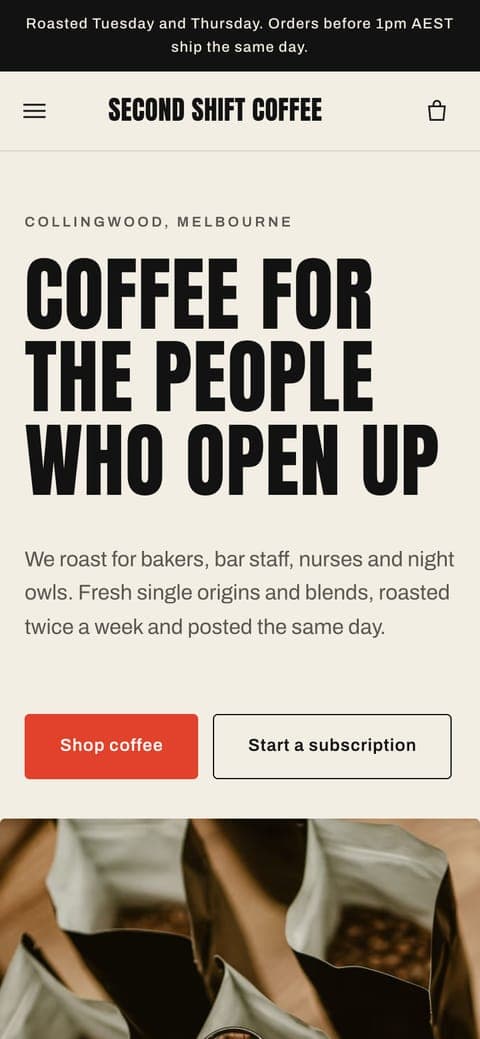
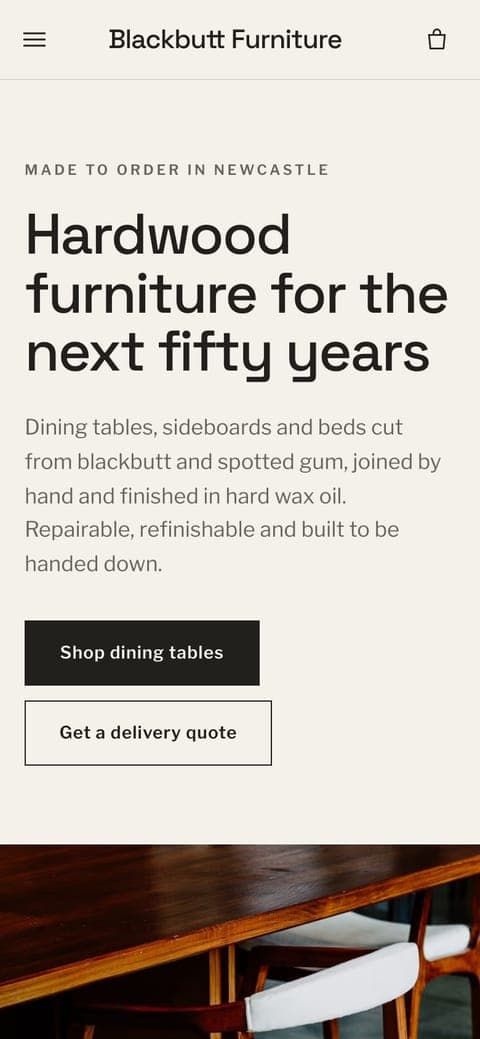
All twelveConcept stores we designed and built to show our work. Click through to shop them.

Further reading
Guide9 min read
Klaviyo flows for an Australian Shopify store, and the Spam Act rules behind them
A handful of automated flows does most of the work in email. Set them up once, check consent properly, and let them run.
Guide9 min read
Shopify shipping in Australia: Australia Post, StarTrack and what replaced Sendle
Shipping decides whether a sale makes money. This guide covers the carriers Australian Shopify stores use, how to connect them, how to price shipping at checkout, and why Sendle is no longer on the list.
Guide9 min read
How to set up GST on Shopify in Australia
Australian shoppers expect to see one price with GST included. Here is how to configure Shopify to show it, what your invoices need to say, when you have to register, and what changes when you sell to New Zealand.
Tell us what you sell
A few lines about your store and where it's at. We reply within one business day with questions or a fixed quote.