Shopify for homewares
Shopify for Australian homewares brands
Homewares buyers want to see the object, understand how it is made and trust that it arrives in one piece. We build Shopify stores that sell handmade and designed goods with the story, the detail and the shipping to match.
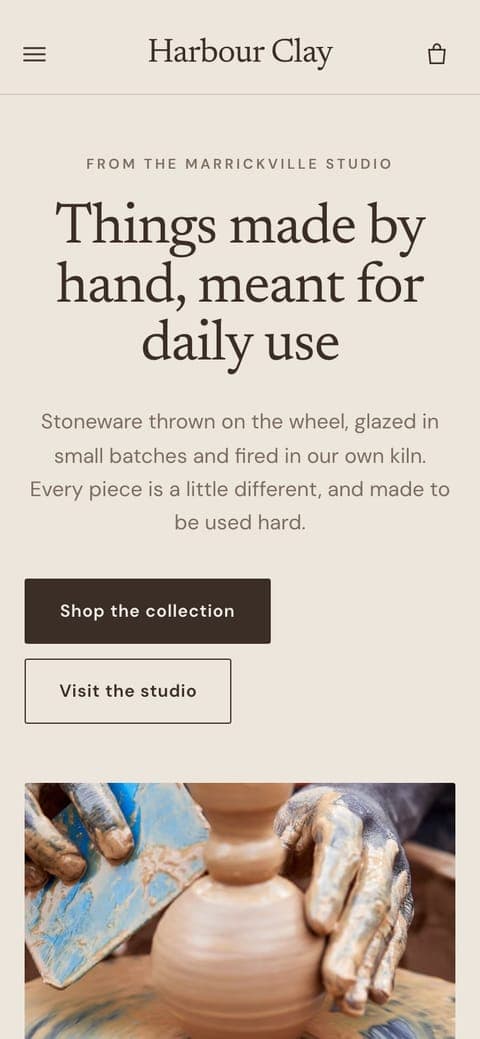
Example store
Harbour Clay
An editorial store that lets handmade pieces take their time.
What makes homewares hard to sell online
Fragile shipping
Ceramics and glass break. Packaging cost, breakage claims and honest delivery promises directly affect margin.
Small batches and one-offs
Handmade stock sells out. A store has to show low stock honestly, capture demand and handle made-to-order lead times.
Selling the object
Size, weight, finish and care are what buyers want. Thin pages with one photo lose them.
Gifting peaks
Christmas, Mother's Day and wedding gifting make up a large share of sales, with strict cut-off dates.
What we build into the store
Detail-rich product pages
Dimensions, capacity, materials, care and maker notes held in structured fields, with several photographs per piece.
Made-to-order and pre-order
Clear lead times, with stock and expected dispatch dates handled in checkout.
Gift options
Gift wrap, a message field and gift cards set up properly, with delivery date selection near Christmas.
Sets and bundles
Dinner sets and mug pairs sold as bundles, with stock per component.
Back-in-stock capture
A signup for sold-out pieces, so you know what to make next.
Wholesale for stockists
Trade pricing for cafes, shops and interior designers, using customer tags or Plus B2B features.
Selling handmade goods honestly
Handmade pieces vary, and good stores say so. We write product page patterns that explain glaze variation, size tolerance and lead times without apology, which reduces returns and builds trust.
Our concept store Harbour Clay uses editorial layouts and maker notes. It is a concept we designed, not a client.
Shipping fragile goods across Australia
Rates should reflect real packaging and weight. We set shipping profiles for heavy and fragile items, offer flat rates where they suit, and show realistic delivery times to regional addresses. Our shipping guide covers Australia Post and StarTrack.
- Add packaging cost into shipping rates, or into the product price.
- State your breakage policy plainly. Goods that arrive broken are faulty under consumer law.
- Photograph packaging so customers know what to expect.
- Offer shipping insurance only if you will honour it. A transit-damaged item is still a problem you need to fix.
Gifting season and wholesale
Christmas postage dates decide whether a gift arrives on time. We show the last order date per region, from Australia Post's published dates, and plan Black Friday and Boxing Day offers against your capacity to make. For stockists, we add a simple trade ordering path.
Most makers use Launch, and larger brands move to Custom. See pricing, or contact us.
What a good homewares product page needs
Homewares are bought by people who cannot touch the thing. The page has to do the job of the shelf and the shop assistant.
- Dimensions in centimetres, with a drawing or a photo that shows scale next to a familiar object.
- Weight, which also helps shoppers judge quality and sets shipping.
- Materials and finishes, and what is food safe, dishwasher safe or oven safe, stated only if it is true and has been checked.
- A note on natural variation for handmade items, so colour and glaze differences are expected.
- Lead time for made-to-order items, shown near the add to cart button.
- Room photos that show the piece in use, plus a clean cut-out on white.
For one-off pieces, set the inventory to one and turn off continue selling when out of stock, so you never sell something twice. Keep sold pieces visible if you want them to keep ranking, with a link to similar work. Detail lives in metafields, which keeps pages consistent across a growing catalogue.
Apps we use for homewares stores
Most homewares stores need a few well-chosen tools and no more.
- Shopify Bundles for sets, such as a four-piece dinner set, with stock tracked per item.
- Klaviyo for back-in-stock alerts on sold-out lines and for gifting flows ahead of peak dates.
- Judge.me, Okendo or Stamped for reviews with photos from real homes.
- Pinterest and Google & YouTube channels to publish products where people plan their homes.
- Shopify Flow to tag wholesale orders and fragile items for packing.
- Shopify's B2B tools or a wholesale app for stockist accounts. See Shopify B2B and wholesale.
Search & Discovery from Shopify lets shoppers filter by colour, material and room. For pairing items, Shopify's recommendations or a small upsell app is enough. See Shopify SEO for Australian stores for collection structure that matches how people search.
Common questions
Who is responsible when a parcel arrives broken?
Generally you, as the seller. Under Australian Consumer Law the goods must arrive fit for purpose. You can then claim against the carrier or your insurance, depending on cover.
How do I sell made-to-order pieces?
Use pre-order or made-to-order messaging with a stated lead time, and keep dispatch dates accurate.
Can I sell sets with different components?
Yes. We build bundles with stock tracked per piece.
Can I add wholesale for stockists?
Yes, with customer tags and an app, or Plus B2B features if you need price lists and company accounts.
How should I price shipping on heavy goods?
Use weight-based rates tied to real carrier costs, or flat rates with a margin built in. We model it with your numbers.
How do I list one-of-a-kind pieces?
Create one product per piece with an inventory of one, and switch off selling when out of stock. Photograph that exact piece, and consider hiding sold items or redirecting them to a similar collection.
How do I charge for shipping on items of different sizes?
Enter accurate weights and, where needed, set up shipping profiles with rates by weight or product type. Carrier-calculated rates need the right plan, which our shipping guide explains.
Further reading
Guide9 min read
Shopify shipping in Australia: Australia Post, StarTrack and what replaced Sendle
Shipping decides whether a sale makes money. This guide covers the carriers Australian Shopify stores use, how to connect them, how to price shipping at checkout, and why Sendle is no longer on the list.
Guide9 min read
Shopify SEO for Australian stores: a practical checklist
Shopify gives you a decent technical base. The rankings come from how you structure collections, write product pages and fix the handful of quirks every Shopify store has.
Guide9 min read
Afterpay, Zip and Shop Pay Installments on Shopify in Australia
Buy now pay later is a normal part of Australian checkout. Here is what Afterpay, Zip and Shop Pay Installments mean for a Shopify merchant: setup, fees, payouts, and what the 2025 regulation changed.
Tell us what you sell
A few lines about your store and where it's at. We reply within one business day with questions or a fixed quote.